Rebuilding the Car-Buying Journey Across Eight Markets
Built the Middle East’s first end-to-end digital car-buying experience for General Motors; from product strategy through to launch across 29+ dealer websites and 8 countries.
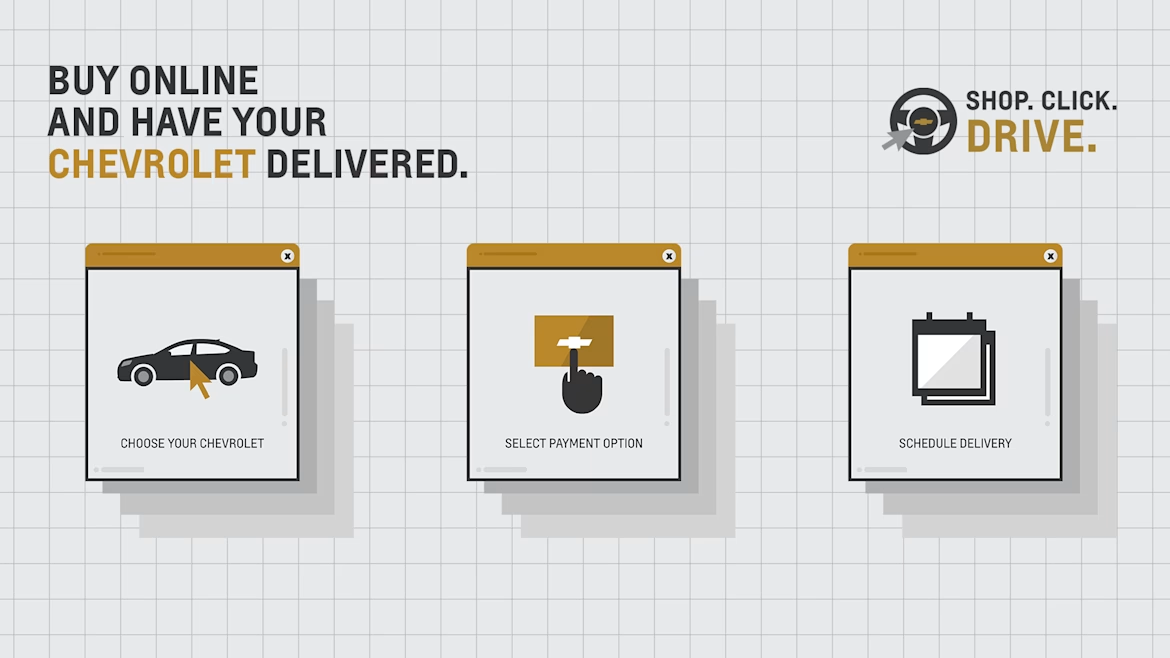
Buying a car in the Middle East meant going to a dealership. Research happened online, exhaustively. Every step that moved the purchase forward happened in person. Buyers arrived at the showroom having compared specifications, read reviews and formed a shortlist, then repeated that entire process verbally with a salesperson who had no idea any of it had taken place.
General Motors set out to close that gap across eight markets. The prevailing regional view was that nobody wanted to buy a car online. The evidence said something narrower and more useful: buyers did not refuse to transact digitally. They were forced offline at the exact moment they were ready to move forward, and made to start over when they got there.
Mapping where the journey broke
Four points accounted for most of the friction, and none of them was the final signature.
Pricing. Opaque by convention, and the single largest source of buyer anxiety in the category. It was the reason research stalled rather than progressed.
Repetition. Nothing a buyer did online carried into the dealership. The research phase had no memory.
Trade-in uncertainty. Most regional buyers have a vehicle to dispose of. Without a valuation they could not work out what the purchase actually cost them, which made every other number on the page provisional.
Finance. Pre-qualification happened at the dealership, late, after emotional commitment. That is the worst available sequence for the customer and a reliable source of collapsed deals.
What was built
Eight markets, 15+ dealer networks and 29+ web platforms, each with different inventory systems, pricing structures and regulatory requirements. The complexity was less technical than organisational.
Dealers designed in, not disintermediated. The critical decision. A platform that bypassed dealers would have been rejected by the network it depended on. The journey handled research, configuration, pricing transparency and finance pre-qualification, then routed a qualified, informed buyer to the dealer for completion. Dealers received better prospects, not fewer.
Price transparency as the core feature. The most requested and most resisted element. Publishing clear pricing removed the largest source of buyer anxiety, and proved to shorten rather than undermine the negotiation that followed.
Trade-in valuation inside the journey. Not a separate enquiry form bolted to the side. Omitting it would have broken the journey for the majority of the audience.
One experience across fragmented infrastructure. Twenty-nine dealer websites meant twenty-nine inconsistent experiences. Consolidating them into one coherent journey, while respecting local pricing, inventory and regulatory differences, was the majority of the engineering effort and almost none of the visible output.
The operational discipline that made it convert
A well-designed journey that hands a qualified buyer into an inbox nobody reads has improved nothing. That is the standard failure mode in automotive digital retail, and it is an operations problem rather than a design one.
Lead management KPIs and SLAs. Leads were tagged by source and intent, high-intent leads were prioritised, and everything was routed into dealer CRM systems against defined response targets.
Conversion tracked to handover. Lead-to-sale was measured from first click through to the customer taking delivery, rather than stopping at form submission. That single decision changed which optimisations looked worthwhile, because the steps generating the most enquiries were not the steps generating the most cars sold.
Dealers treated as a second customer. The network received governance frameworks, performance toolkits, ready-to-use campaign assets and lead-quality reporting. A digital platform that makes a dealer’s day harder gets quietly abandoned at the point of execution, however well it performs in a pitch.
Physical and digital deliberately aligned. Launches were coordinated with the Dubai International Motor Show, dealership showrooms and mall activations so that online messaging and the in-person experience matched. A customer who sees one promise online and a different one in the showroom has been given a reason to doubt both.
After the sale
Post-purchase and service engagement programmes were built with the dealer network, and customer sentiment captured through surveys and social listening was fed back into campaigns, dealer communications and the online journey itself.
Treating the journey as finished at delivery is how organisations spend heavily to acquire customers they then lose quietly, and it is the most commonly skipped half of customer experience work.
Why it worked
The platform never tried to replace the dealership. It removed the parts of the process buyers disliked, waiting for pricing, repeating research, uncertainty about trade-in value, and preserved the parts that genuinely required a person.
Five Effie Awards recognised effectiveness rather than craft, which is the relevant distinction. The journey changed commercial behaviour across eight markets and set a regional benchmark that competitors spent years working to match.
The transferable lesson
The hardest part of taking a transaction online is rarely the technology, and rarely the customer. It is the intermediary whose role the new journey appears to threaten.
A journey designed to remove the dealer would have failed on adoption no matter how well it tested with buyers. A journey designed to hand the dealer a better-informed customer succeeded because everyone whose cooperation it required had a reason to want it to work. Transformation inside a franchised or partner-led model is an alignment problem first and a design problem second.
Awarded. Adopted. Repeated.
Online car buying became the benchmark for automotive digital retail across the Middle East, winning five Effie Awards and setting a standard that competitors spent years trying to match.
This project proved that with the right strategy, even the most traditionally offline category can be transformed into a digital-first experience that consumers actually prefer.