The Region’s First Online Heavy Equipment Sales Platform
Launched the digital strategy that drove Hala Heavy Equipment to #1 SEO rankings across all major keywords and built the region's first online heavy equipment ecommerce platform; delivering 280% revenue growth over six years.
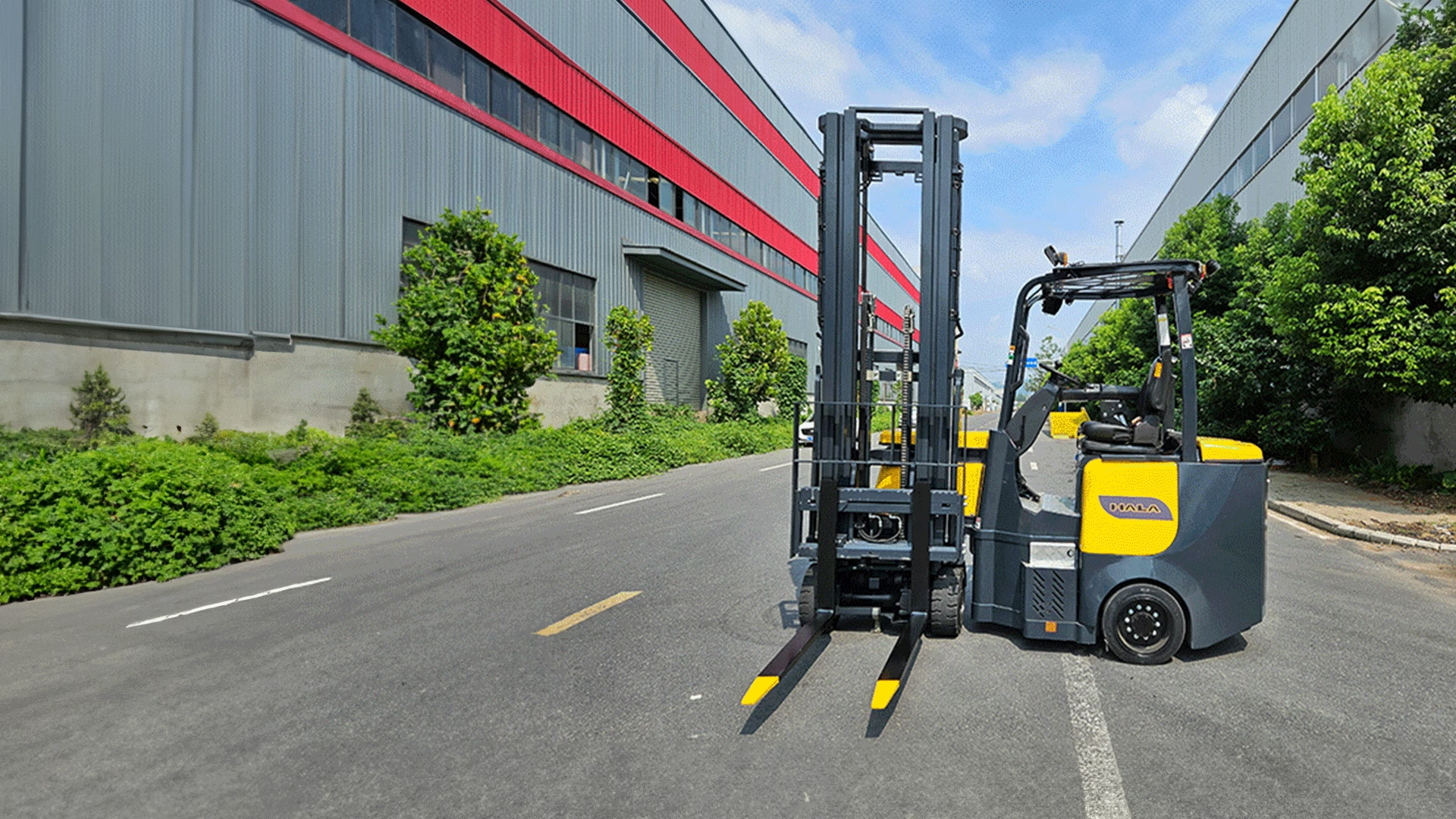
Heavy equipment is one of the last B2B categories anyone expected to move online. Forklifts are high-consideration, high-value purchases, usually specified by a technical buyer, quoted by a salesperson, and closed over the phone or in person. The category had no meaningful digital presence in the region because nobody believed it needed one.
Hala Equipment Trading, the official UAE distributor for Heli forklifts, took the opposite view. The question was not whether buyers were ready to transact online, but whether they were already researching online and finding nothing.
The starting position
They were. Search demand for forklift specifications, pricing and parts in the UAE was substantial and almost entirely unserved. Competitors had brochure sites at best. Buyers researching a purchase found manufacturer PDFs, classified listings and very little else.
That meant two things. The category had an open organic search position available to whoever claimed it first. And a buyer who had already done their research online was arriving at the sales conversation better informed and further along than the sales process assumed.
What we built
Search first, platform second. The sequence mattered. Building eCommerce for a category with no organic visibility produces a transactional site nobody finds. We established search dominance first: a full technical SEO rebuild, a content architecture organised around how buyers actually search (by application and load capacity, not by internal product codes), and specification-level pages for every model in the range.
That work took Hala to first position across all major category keywords in the UAE market.
Then the commerce layer. The region’s first online heavy equipment eCommerce platform, designed around how this category actually buys. Not a consumer checkout bolted onto industrial products, but a system that handled configuration, quotation, parts ordering and fleet enquiries, with the ability to complete a transaction online where the buyer wanted to, and to escalate to a salesperson where they did not.
Parts as the entry point. The insight that made the platform work commercially was that parts, not machines, drive online transaction volume in heavy equipment. A customer who will not buy a forklift online will absolutely order a hydraulic filter online at 7am when a machine is down. Parts transactions built the habit; machine enquiries followed.
Why it worked
Three things, none of which were the technology.
The sequence. Visibility before transaction. Most B2B eCommerce projects invert this and then conclude that the category does not buy online, when in fact nobody could find the site.
Respecting the buying process. The platform did not try to remove the salesperson. It removed the parts of the process that frustrated buyers: waiting two days for a specification sheet, not knowing whether a part was in stock, having to call to get a price on a consumable. Sales kept the conversations that needed judgment.
Compounding rather than campaigning. Organic search and platform investment compound. The 280% revenue growth did not arrive in year one. It accumulated across six years as search positions held, content depth increased, and the platform became the default way a growing share of customers transacted.
The transferable lesson
The received wisdom that traditional B2B categories cannot move online is usually a statement about the seller rather than the buyer. Buyers in every category research online now, including buyers of industrial machinery. The question is whether they find you when they do, and whether what they find lets them make progress.
For categories where nobody has claimed the digital position yet, the opportunity is unusually large and unusually durable, because search authority built early is very difficult for a late entrant to displace.
From zero digital to regional leader.
By combining a robust SEO strategy with the region's first online ecommerce platform for heavy equipment, Hala built a digital presence that matched their market ambition; and the results compounded year after year.
The Hala project proved that with the right digital strategy and ecommerce infrastructure, even the most traditionally offline B2B industries can build dominant digital positions and drive transformational revenue growth.